|
Closing the door quietly behind her, Sasha looked out on the day unfolding. The early -morning sun starting to warm the damp autumn earth, she took in a deep breath and steadied herself on the door frame.
Life is such a funny thing she thought. One week feeling on top of the world, the next down and flat, hardly able to face the day. Pushing herself off the door frame she took another deep breath and stepped out into the yard. The lawn needs mowing … again, she observed. Never ending. This yoyoing has gotta stop she sadly pondered, as she clambered over the gate in her redbands, the release now too rusted to budge. Trudging through the long grass, Bella bouncing at her heels, Sasha looked out over the valley. The recent rain had ignited the growth and a few wild flowers now showed their heads amongst the swaying grasses. She reflected back over the last few months. So many endings. It had been tough, like wading through treacle at times. Thinking that she had already processed many of the losses in her life, it turned out she hadn’t, that some of the residue had leaked deep into little nooks in her heart and these had sprouted once again, crawling out and raking at her, little bits of trauma from one thing and another all meshed together to form a painful grasp that sat only slightly veiled behind her hazel eyes. She thought back to her twenties and the father she lost at her exact age now. She still missed him, some 25 years on, still hardly a day going by without reaching out to him. Sasha had come to realise that they had a lot more in common than she had initially understood. To be fair, when you’re in your early 20’s and dealing with your own life dramas, one doesn’t really comprehend the journeys of others. It’s not till they are gone and you go through your own life, get in touch with your own inner wisdom that you start to realise the strength of connection – that nothing happens by ‘accident’. Her mind jumped to other life trauma, some life altering, others leaving little scars of truth and wisdom. Severe loneliness in her teens; rejection; betrayal; IVF; deep, life defining loss; judgement; divorce; finding, embracing joy and now snipping the last cords of a deep love, not destined to last forever in this lifetime. Sasha sat on the old wooden stump, scratching Bella’s ears as she surveyed the beauty before her. Feeling the heaviness in her heart, she rubbed the space with her palm. ‘Hm, it’s like a sad haunting’ she said aloud to Bella, who cocked her head and looked at her master. For Bella saw the sadness. Even when there was laughter in the house, she sensed the process of letting go, the process of healing that Sasha had opened herself up to, knowing that to step into the new she needed to, once and for all, close the door on what was. Bella knew, in her own way, that Sasha needed her as much as she needed Sasha. Her previous guardian had not been kind and when the time had come that Sasha threatened him with calling the police, he had surrendered Bella to her, moving away not long after, much to the relief of both Sasha and Bella. Bella leaned in and placed her nose on Sasha’s knee looking up into her eyes, a wee whimper of ‘it’s gonna be alright’. Sasha sadly chuckled at the comical look. Bella had only one seeing eye, the other permanently damaged thanks to a kick from that bastard of a …. She breathed in and consciously let it go. ‘Okay girl, let’s go check the traps’ she said to Bella rising, with one last rub of the ears. The two continued down the gully, the sun continuing to rise over the saddle of the hill behind them, creating odd shadows as they moved through the grasses. A gentle voice popped into Sasha’s distant thoughts ‘there is no light without shadow, no growth without rain’. She paused for a moment, looking around, the voice had been that clear. Looking down at Bella she asked ‘did you hear that girl?’ Bella stopped and gave a yap, looking round too and then with a slight grin at Sasha sprung into the grass and continued on her way. Sasha took one more look around and then shook her head, bringing her into the moment. She was coming up to the first stoat trap. Bella had already sniffed it out and knew it was empty and had moved on in the direction of the next. Shadow work. She had been doing some reading around it. It was, in effect, to recognise that it is all part of the whole. What one might define as the good, the bad and the ugly. That to deny the parts of ourselves that we did not like, was to deny part of who we were. It also denied us the opportunity to grow through it, to become stronger and more resilient. To know that our shadow, as much as our light, was all part of the human experience. At that moment, an actual shadow crossed over Sasha’s face, raising the hairs on her arms. Looking up, she saw a great bird, eagle like, soaring some 100 metres above her. ‘Well, that’s bloody strange,’ she thought as she removed her hat and stepped back on her right leg, putting her hand above her eyes to take a better look at the bird. It moved off to the front and right of Sasha and then started to circle some 200 metres away, as it slowly maneuvered closer to the earth. Calling to Bella to stay back, she headed off in the birds direction, as she felt it calling her. Coming up over a small rise, Sasha came to a sudden halt, the picture before her taking her breath away. There on the fence post, not 15 metres away, sat this quite majestic bird – one she had not even seen in any picture books. Although it looked similar to the New Zealand Falcon, it was by far to big, let alone the heart shaped plumage on its breast plate. The bird sat quite still looking directly at her, as if waiting for something. They stared at each other for some time, before Sasha took a few gentle steps forward, cocking her head to one side. The bird continued to remain motionless, only its eye following the movement of the woman. It was not here by accident. There was an era, when many of its kin had soared these very skies, but that had been a long time ago – before the great eruption had flattened all that stood and had silenced the world for a while. Sasha, her heart beating wildly, moved closer to the bird until she was within two metres of it. Although her senses were extremely heightened, she strangely felt no fear, only a longing to understand better what her eyes were telling her. Coming to a stop, she looked closer at the bird and was suddenly overcome by the need to bow. And with that thought, she did so, bending down low and slow in reverence of the beauty and undeniable strength before her. She heard the voice again, her head lowered. ‘Why do you bow before me. Do you not recognise who I am?’ Sasha shook her head while closing her eyes, trying to clear the thought that she had finally lost it. Taking a very deep breath she slowly stood upright, opening her eyes to gaze upon the creature before her. ‘Do I know you?’ she said aloud. The bird looked back at her, ruffling its mighty wings. ‘I am that which you have not yet acknowledged. I am freedom.’ The most ridiculous grin spread across Sasha’s mouth as she threw her head back and looked at the skies shouting ‘I have lost my mind!’ laughing hysterically at the heavens. ‘On the contrary my dear heart.’ She stopped suddenly, noting that Bella was now sitting on the knoll looking at the bird, completely relaxed, like nothing was out of the ordinary. ‘So you see ‘it’ Bella?’ ‘Her, I am of the feminine,’ the voice softly clarified. Sasha spun around and moved even closer to the bird, quite within touching distance. ‘You know if you touch me, you will need to acknowledge my existence earth angel. Are you ready for that?’ Sasha became transfixed, her hand half way out as she reached for the bird now remained motionless. ‘Who are you?’ With that the bird bowed its head and leaned in to connect with Sasha’s forehead and for a moment the two thought as one. Sasha’s whole life flashed before her and then many other lives, in this dimension and others. She was flying high above her ‘lives’ and like a river saw the connections, how they ebbed and flowed. Torrents, calm waters and more torrents. She saw how her choices had carved out great and heavy experiences that had moulded her soul and so often called her home. And then it all stopped and the only thing she could sense was now, this very moment. Raising her left hand, she placed it on the great birds breast and stroked the feathers, their foreheads still connected. Sasha let out a great sigh as tears started to fall from her eyes. ‘I have been so lonely.’ ‘You are never alone, you just lost connection with your heart, who you truly are. Yet you have made choices that have brought you to this place of great strength, great wisdom. Knowing, painful that it is, that you deserve only the best.’ Sasha wept and as the tears continued to fall she felt the release of guilt, the release of pain and the release of fears that had bound her to the past. ‘You carry deep within the recesses of your heart a great and gentle knowledge that the world needs to hear. You have earned this as your soul has journeyed many lifetimes to prepare you for just this moment. Your awakening.’ Sasha wavered for a moment as she soaked in the true sense of the words. As the fact remains that sometimes there are no words in which to fill ones heart completely. After a while she asked, ‘will you stay with me?’ ‘I am always with you. For I am your kin, your heart and your soul. I am what was, what will be and what forever is. I am you and you are me. Strength, power and almighty wisdom.’ At that moment, a great wind came through the valley, rustling the most sturdy of trees. The great bird pulled back and looked directly into her eyes ‘remember that the hero that you seek is already within you.’ And with that, the almighty creature spread its powerful wings, raised its head to the skies and rose, circling into a great beam of light that shone down from the heavens. Sasha stood back watching the bird ascend, her feet firmly anchored on the earth as her hair spun madly around her. She felt Bella licking her hand and knelt down to pull the dog close, all the while feeling her heart settle into a new rhythm – one full of hope and a sense of purpose. Having no memory of how she got home, Sasha rose the next morning feeling weightless. Putting her cup of hot tea on top of the fence post, Bella at her side, she looked out over the valley before her. In one mighty breath she yelled ‘freedom’ at the top of her lungs and laughing merrily, she ran her arms out stretched into the meadows beyond. Author: Tania Louise April 2021
0 Comments
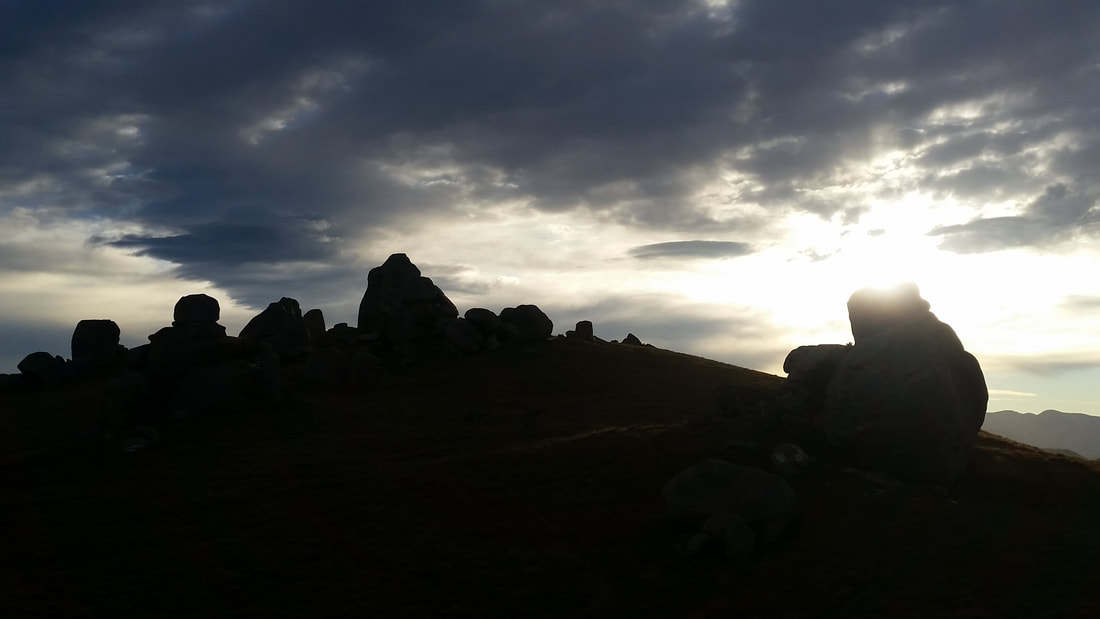 On a rather crisp, clear morning, I puffed my way to the top of Kura Tāwhiti (Castle Hill), a stunning, eery and deeply significant site in the South Island of Aotearoa New Zealand.
I had arrived pre-dawn and alone. This place had been calling me, an area I’d being yearning to experience since a stranger had hinted at its mysteries a year or two prior. With bare feet, I quietly navigated my way around the upper site, feeling the immenseness of my solitude in amongst the great silence. While some say the stone formation on the hill is naturally formed, it was hard not to feel magic at play. The mighty stones all rested in such a way, as to create a sacred space. I sat, leaning against the cold solidness of the largest stone, an insignificant form on a majestic landscape. I looked out to the great expanse of snow-tinged mountains surrounding us. She, my companion of stone, not only felt central to the formation of the stones immediately around me, but thinking back, to the whole area I gazed upon. In those quiet moments I inexplicably felt my significance and my insignificance. A tiny dot amongst the grandness of ancient form. It’s hard to explain exactly. It’s a knowing that while I am an individual, I am also very much part of the whole. The crisp air I breathed, the cold earth that numbed my feet, the hard formation upon my back. Knowing that all of this had been breathed, felt and connected to over millennia. That I, in this lifetime and maybe a few before, felt not only connected to but part of it. I was recently reminded of this five-year-old experience as I sat with some successful, creative, groundbreaking women. While it was my first event, for them it had been many. I felt the deep sense of connection and trust. I was uplifted to be in their presence. The reason for this triggered memory was a korero around a piece of advice given to one of the group ‘we are everything and nothing.’ While, a first reaction can be the harshness of this statement, it can also be incredibly liberating, as the ancient Greek philosopher Heraclitus said ‘Nothing is, Everything is Becoming.’ I have met many vivacious women in my time. Beautiful wāhine following their passion, making a difference. It catches me off guard when I have heard some express their feelings of imposter syndrome (that beastly feeling you get when you think you are unqualified or incompetent). I know it well. I have learnt, although need to remind myself on occasion, that I’m always exactly where I’m meant to be. Whether it’s to learn, to grow, to disrupt, to teach or just to be. Consciously or unconsciously, I have brought myself to this moment, meaning I’ve got this. Learning to trust my inner wisdom, even in its vulnerability, has been one of my greatest learnings. Getting out of my head. Trusting my gut, trusting my heart (not always the emotional one 😉). We are significant and insignificant. Everything and nothing. We are individuals, yet part of a majestic wider existence. Each one of us holds purpose. To radiant our true essence, no matter its form. This is a truth. PS While this piece may focus on the glorious feminine, I acknowledge our gorgeous masculine, with many also struggling in this space. Here’s further information on Kura Tāwhiti. 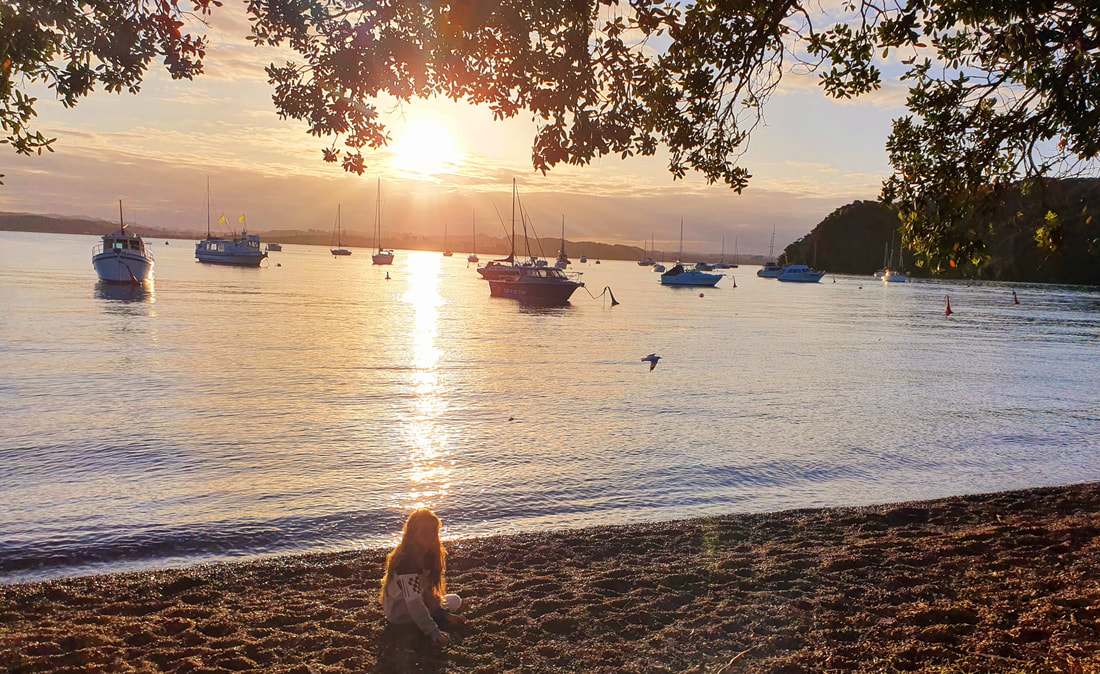 Mārama celebrates 110 years around the sun
The deep hues of early dawn whispered through the lingering mist, casting dreamy silhouettes upon the white sands. Dragonflies danced upon the pools of last night’s rain, while the heavens still glittered with wisdom and promise. It was Mārama’s most favourite time of day, when the dew still laced the intricate spider webs, the Tui’s song rang out through the softened silence and where she sometimes met the last Kiwi heading home for its daily slumber. This was Mārama’s magic time. When she dug her now wrinkled toes into the Papatuanuku’s cloak and wound her fingers through the branches of the Kawakawa. She whispered her karakia of acknowledgement and gratitude, reflecting on times gone by and the potential of journeys to come, while being deeply rooted in the moment at hand. This morning she was joined by a wee imp of a bionic human, who had unenthusiastically travelled from the other side of the globe to filter through her extraordinary life. Extraordinary in that Mārama and the region as a whole, bucked world trends of poor health, high inequality and a backyard void of green. The push had been to upload her memories, but Mārama insisted on kanohi to kanohi, knowing what the researcher sought could only be discovered by immersing themselves in the whenua. The timing intentionally coincided with her 110th birthday. A celebration that would last three glorious days and nights, with her many whanau and extended village. It would be a feast of locally grown kai (none of that instant cardboard stuff she had insisted) and clear nectar, surrounded by a roaring fire and the lush, sweet smelling ngahere. They sat on the edge of the ocean, perched on a jewelled rock, their toes dipping in the tranquil waves, while Miromiro flittered about, catching their morning breakfast. Mārama sensed the settling of her companion as the vibrations of nature eased their tired soul. Mārama had allowed their wrists to connect, knowing that this would access the vivid memories she had chosen to share. The idea of all unspoken communication was rejected, as Mārama embraced the old ways of story telling and the comfort of a soothing voice. Pointing to the heavens in the glistening dawn, she explained that Tai Tokerau had led the way in implementing only green energy at least 80 years ago, which, along with a number of other initiatives (including a no-fly zone of satellites and other such things during darkness) had ensured that generations could live by the wisdom of Maramataka, which helped ensure abundant kai, while respecting and protecting Papatuanuku, amongst other things. While many land masses were negatively impacted by the warming, Taitokerau’s microclimate had been fairly protected. By retaining the wild canopy, along with heavy investment in plantings, the soils had been cared for and thus aided in not only protecting many of the ancient flora and fauna but the ability to grow nutritious plants for eating and other health initiatives. While there had been some loss, it was nothing compared to many countries around the globe. Her companion shared her observation that they were surprised to see little sign of industry. Mārama grinned. ‘As you know we have a thriving economy, it’s one of the key reasons our region flourishes and there is no such thing as unemployment. All our people are engaged in productive activities that operate in sync with our environment.’ ‘At least 70 years ago, our local leaders made the courageous decision to change the way we build our infrastructure, particularly buildings and the connections between them. Many industries are either buried under or sit within the earth. Their roofs are covered in plants, which not only provide a way of keeping things cool, but are their own microenvironment and are cultivated and used to collect and recycle water and other nutrients.’ ‘There was also a shift to industries and approaches that worked in harmony with nature. Green energy, protecting and enhancing our clean water supply, a circular approach to how we do business and live was quickly introduced, where nothing is now wasted. As you know, Tai Tokerau is a world leader in working with the flow of nature, all our people and place have flourished because of it.’ ‘I’m very proud of our brave local leaders of those times and the succession of great leaders they have since inspired. They went against mainstream thinking and nurtured the old ways, while encouraging innovation and technological approaches that would add benefit, without detracting from the importance of our connections, our relationships – with each other and with nature.’ ‘We quickly realised as a region that we could produce, manufacture and sell highly nutritional and healing products, which are now world renown. These plants and medicines are grown and produced from our moana and our whenua, which is almost chemical free.’ ‘Another wonderful opportunity was seized, in that Tai Tokerau became a peaceful retreat sort after by those that needed to ease body, mind and soul. We have a flourishing natural health industry, along with being a wonderful place to raise families, live simply and retire peacefully.’ For a moment, Mārama cheeks flushed. Her companion eyed her. ‘Oh, Āe my husband Torbjörn, was one of many migrants that moved their multi-million-dollar business to our shores, due to our ethos and way of doing things. Lucky for me!’ she giggled. Being at the cutting edge of technology, with a number of research and development institutions that worked alongside the two universities, had allowed the region to stay ahead of the game. Mārama chuckled reflecting back on the excitement of her sibling, Tama (a teenager at the time), when their small community finally got reliable high speed digital connectivity to the globe. ‘It was a game changer at the time. We’re come so far since!’ ‘You know’ Mārama sighed. ‘It hasn’t been easy. The impacts of some terrible world events, change in our climate, political systems falling and rising, these and other more local impacts have provided some real challenges and we haven’t always got it right. One thing I know for sure, the resilience of our whanau, our care and compassion for each other has seen us through some of the toughest of times. It is because we are strong as a people, hold sovereignty and are clear on our purpose that we have managed to stay true to our course.’ ‘E mihi ana ki a koe, he pēhea koe i tēnei rā? The words singing out from the bush behind Mārama, snapping her back into the moment with a smile. ‘He tino mihi ki a koe’ she replied. Turning to her companion, Mārama winked. ‘There is plenty of time to discuss this. Come! Immerse and feel it for yourself. Join our celebration of life, there is so much to be grateful for!’ Her companion looked out over the horizon, feeling the warmth on the morning rays upon their chest. Their head swimming with the images of times gone by, the beauty and the pain. Already, they were formulating a way to remain in this tomorrow world of yesterday. 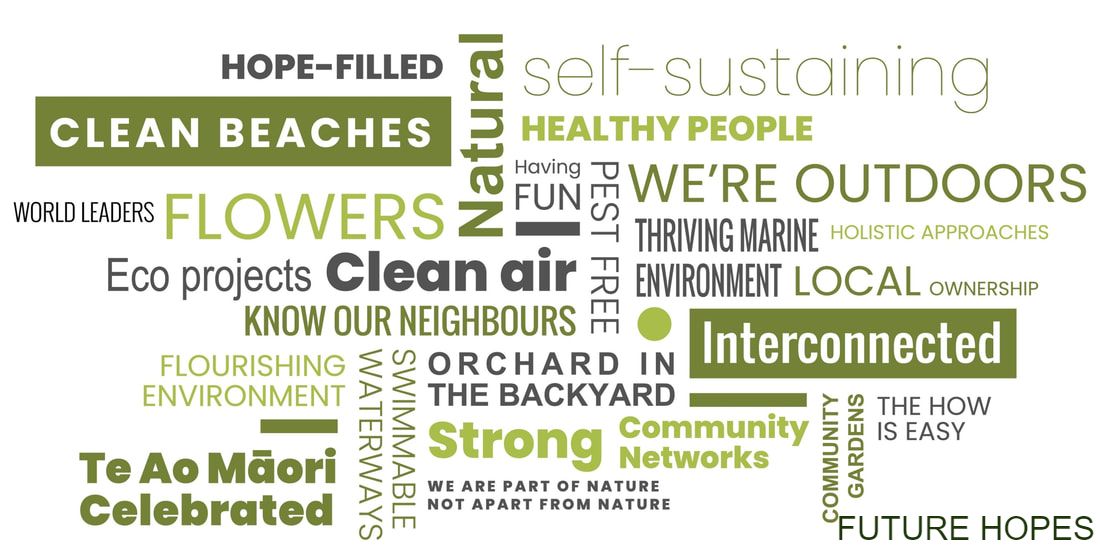 My key reason for running for Northland Regional Council is my deep love for our home – our taiao/natural environment. I’m super concerned that if we don’t do something quick smart, the backyard that we so love living and playing in will become a distant memory for our not-so-far-in-the-future generations.
Lots of contributors, including pests, invasive weeds and of course, human impact. Consider this; back in 2017 the Clean Water Report states that 71% of Northland lakes and rivers are either poor or intermittent (i.e. unswimmable) leaving just 29% from fair to excellent (excellent under 5%). One of the challenges is that for most of us, when we look out the window, she looks pretty good. Well, she isn’t, and we need to do something about it. On behalf of the Northland Conservation Board, I had the privilege of leading a community conversation asking Northlanders to outline their hopes and fears for the now and future of our taiao/natural environment. The results were insightful to say the least. 78% of respondents told us they are currently worried about te taiao/the natural environment. 54% said they are worried for the future, with 44% remaining hopeful (yay!) The top five concerns been: loss of taiao/natural environment, pollution, climate change, pests and weeds. The report, titled Flicking the Switch, captures the feedback and proposed solutions, along with providing a foundation for future strategy and action. You can learn more here. Although I had a strong sense of the need to rethink the way we do, this kaupapa/project really provided clarity, which I shared with an observation piece in the report. Following is an extract. ‘We are living in challenging times. Globally. Nationally. Locally. It’s a shake up on many levels, causing much anxiety, uncertainty and fear … our current trajectory suggests continued demise of our natural resources and serious challenges for humanity moving forward. It can and is overwhelming at times. We have a number of choices. The decision to change trajectory sits solely with us. Humanity. It will mean flicking the switch. Moving from how we currently ‘do’ to an approach that recognises and celebrates our interconnectedness. There is a call to put te taiao/the natural environment back at our centre. To recognise and learn to work with the flow of Mother Nature – a Te Ao Māori approach. This simply acknowledges the interconnectedness and interrelationship of all living and non-living things. It will require a rethink. A move from take, use and dump to a circular system that takes into account and mitigates all aspects of the process. Ensuring a more harmonious flow that benefits both humanity and the planet that we rely on for survival. Promoting the benefits of a life connected to and living in accord with nature, will see a return to respecting and valuing all that we have, including each other.’ My commitment is to advocate for the findings in Flicking the Switch, to see Northlanders wisdom implemented - community led and government enabled, leading to a resurgence in the health of our backyard. We all have a hand to play. 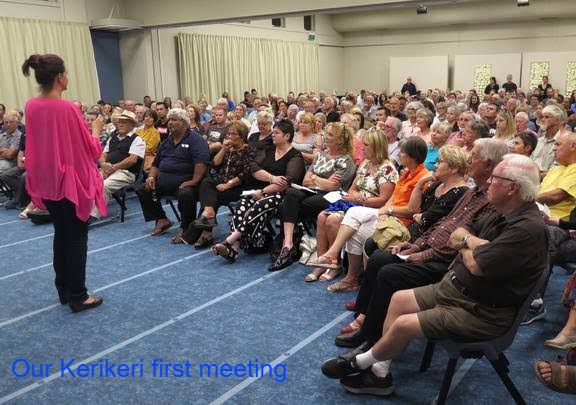 “The regional council is a voice for Northland and Northlanders, and our success lies in working together. Northlanders have the opportunity to elect leaders who can engage the community and communicate Northland’s needs, so council can deliver efficient and sustainable results.”
Malcom Nicolson - CEO, Northland Regional Council (NRC) Excerpt from the Pre-election Report 2022 I am a strong voice for community. My actions reflect this. Examples include initiating Focus Paihia, leading the Far North District Councils ‘Our Voices, Our Vision’ kaupapa in 2015 (now a foundation of FN2100) and my recent piece of mahi on behalf of the Northland Conservation Board, Arohatia te Taiao. I actively promote and seek community engagement, as I recognise this is where our power lies. In seeking your vote for NRC, I promise to uphold my commitment to engaging with Northlanders. This is critical if we are to address some of the many challenges facing the region moving forward. I also promise to be a ‘loud’ advocate for Northland, my home for over 40 years. I truly believe that we can lead the way in how we look after our people, our place. I have highlighted five key areas of focus, noting that there are other activities that require attention, such as safe and effective transport networks and the local government reforms.
The Arohatia te Taiao (loving our natural environment) initiative has provided a rich platform for Northland leaders, communities and individuals to move forward. An extract from the website (written by myself): 'Suggested local solutions and approaches, as shared by our local communities, offer practical ways to mitigate the many challenges we are facing. The findings highlight a perceived disconnect. In that much of humanity see Papatūānuku as a resource, rather than a living breathing entity. Our siloed activity in how we interact does not help, in that there is not one overarching approach, rather it is divvied up (think public, private, local government, central government). Findings show this needs to be remedied. Papatūānuku is our home. It is vitally important that te Taiao is at the centre of our decision making and not an afterthought. Humanity’s survival depends on it. By reconnecting and treating her with respect and aroha, we not only give hope to a more flourishing environment but also a healthier and happier humanity.' I am committed to serving Northland and Northlanders. My sound experience and understanding of local and central government, along with a desire to see a more hope filled future drive me to stand and make a difference. I humbly ask for your vote. Nga mihi. Following is my first assignment for a course I am studying with The Mind Lab. Leading Beyond Sustainability. It is an argument pro localism.
How might a localism model provide a pathway for authentic sustainable practises that empower local communities to shine? This paper advocates for more devolvement of power and accountability from central government to a local level, whether it be via local government or, potentially, certain not-for-profit community organisations. It is acknowledged at the offset that although Local Government is ‘local’ there is debate around how well it can serve the communities it represents. Take the Far North for example. A geographical size of 7,324 km², with a population of 68,500 or around 9.75 persons per square kilometre. It is a district with areas of high deprivation, inequality issues and aging infrastructure. With a ratepayer base of less than 40,000, it is extremely difficult to deliver on the needs, let alone the wants. What is localism? Wikipedia describes it as a range of political philosophies which prioritise the local. (1) The Commission on the Future of Localism states ‘Localism must be about giving voice, choice and control to communities who are seldom heard by our political and economic institutions. Localism should enable local solutions through partnership and collaboration around place, and provide the conditions for social action to thrive.’ (2) Along with a local example of ‘social action’ in action, this paper uses a Local Government New Zealand initiative – LocalismNZ as a foundation. A discussion paper was launched in July 2019 (3). Of recent it has been incorporated into the Future of Local Government review, now underway. A key driver for LocalismNZ is the way in which Aotearoa - New Zealand is governed – in that it is unusually centralised (and arguably becoming more so). Local Government in New Zealand spends about 12 percent of public funds compared to near half in other developed western countries. Although LocalismNZ does not discuss sustainability specifically, many of the ten reasons provided do capture the essence. These include building community resilience; power and authority being shared around; and a more efficient and effective way of meeting community needs. It’s also good for local democracy! If we consider the growing global discontent in public services (4), in which we are seeing decreasing voter turnout, confidence in democracy waning, trust and dissatisfaction in public services also dropping, it definitely signals that something is seriously amiss with the current system. ‘On a conceptual level, there are important affinities between localism and deliberative democracy. This concerns mainly the democratic goal of engaging citizens in decisions that affect them. Consequently, localism will encourage stronger democratic and political participatory forums and widening public sphere connectivity.’ David J. Hess It’s important to be mindful that the majority of policy is a ‘one size fits all’ approach. In Aotearoa -New Zealand where there are clear differences between rural and urban environmental settings, policy, which is often developed to meet the needs of the majority, thus urban, can have some serious negative impacts on rural living. Along with strengthening democracy, a thriving Localism approach will have positive impacts on a number of the Sustainable Development goals. For example:
If we look to Te Ao Maori, the understanding that all is connected, it makes sense to trust and empower communities to make decisions that immediately affect them. Ko au te taiao, ko te taiao ko au - I am the environment and the environment is I. (6) Localism also offers an opportunity to change mindsets, which will influence sustainability and beyond. To move from a ‘me’ to ‘us’ approach. Putting local decisions back into the hands of communities it affects, helps create collective thinking that shares and cares, grows understanding and respect. Rather than the all too common individual approach of ‘not in my backyard.’ As with all things, there are challenges that would need to be addressed, potentially including ‘flying the plane while building it.’ Others include the need to ensure that the community of interest has the desire to take charge and if so, feel they will be trusted and empowered to lead. With many conflicting pressures, particularly so if poverty is in the mix (7), sometimes there is not the capacity to step into this space. Having said that, this does provide a good argument to support communities in such space, to encourage them to consider local solutions. Another challenge is resource. Whether this be expertise, time, investment or other, inadequate resource commitment can be extremely detrimental to the success of this approach. Having said that, it can also create a space for great innovation. A ‘LOCAL’ EXAMPLE Through high frustrations of ‘inattention’ from the local council, Focus Paihia Community Charitable Trust (FPCCT) was founded (8). Supreme winner of the Trustpower National Community Awards in 2014 and winner of the New Zealand Community of the Year 2015, it’s a grass-roots organisation that was born out of the belief that Paihia has the potential to become an exceptional place to live, work and visit. A not-for-profit volunteer group, formally set up in 2010, the Trusts’ objectives are: -Celebrating our cultural diversity by - respecting our past - thriving in our present - creating our future -A contemporary, maritime village that embraces its cultural heritage and protects its natural environment -World renowned for providing exceptional experiences -Infrastructure complements and enables sustainable development -A connected community where we all feel safe, included and valued -Together, man and nature succeeding in harmony While sustainability is not clearly identified, the goals articulate an authentic approach to growing community strength and connection, while recognising the importance of all four well-beings. The Trust has had a significant impact on the look and feel of the community and is somewhat the envy of other areas. From redeveloping a carpark into an award-winning community space (9), regular community working bees, building and managing the Waitangi Mountain Bike Park (10) to installing CCTV, which is having immediate impacts (11). These, along with numerous other projects, have uplifted what was once a tired environment. One particular project saw the renovation of a public toilet block (with an open sewer and labelled the worst toilet in New Zealand) transformed by volunteers in just 10 days for a cost of $13k. It was estimated it would have cost council in the vicinity of $150k. (This supports another of LocalismNZs’ 10 reasons in that it reduces cost to overall government). Another example of its sustainable approach, was a focus on being self-sustaining - not having to rely on grants and external funding. The Trust undertakes a number of activities to address this. These include operating a community op shop (in which it owns the building) again run by volunteers. Profit last financial year was $128k. It also holds contracts with the local council for town maintenance and beautification, along with managing the village green. It clearly meets the Sustainable Cities and Communities goal of being inclusive, safe and resilient, as the CCTV project has illustrated. It can, however, be argued that one of the greatest outcomes is the binding of a previously disconnected community. That Paihia found its heart, through building strong community connections via projects and activities that sought to celebrate community spirit. The reason for its many successes can be attributed to the leadership of the Trust along with its strong volunteer base. It has and will continue to have challenges, as is inevitable, particularly within small communities. One way to address this will be to ensure it continues to fairly represent the wider community. Another observation will be the need to reflect and evolve the organisation as community priorities flex and change, along with regional, national and global pressures. The recent challenges around Covid-19 and the huge impact it has had on the tourism industry, a staple economy for Paihia, provides the Trust with an opportunity to consider how it continues to unite and uplift the citizens, as human connection is even more vital during difficult times. Its original focus of community beautifying projects has generally run its course (there’s not a lot left to do!) Future focus will need to ensure clarity around its role and clear pathways to continue to support community aspirations. There will always be a need to be inclusive, open and transparent working within this diverse community. FPCCT, a highly successful model, strongly demonstrates the argument for Localism and community empowerment. It clearly shows that communities are capable of making decisions and acting on the things that affect them and with much less cost and bureaucracy. Note: for transparency I was a key instigator of Focus Paihia. CONCLUSION ‘Extreme concentration of power and authority is a risk to all societies. Localism is one way of ensuring that power and authority is spread around communities rather than concentrated in one place. Empowering communities provides a check and balance on central government as it gives citizens a level of autonomy and self-governance on local matters. The result is stronger democracy all around.’ (12) David J Hess Aotearoa – New Zealand is a small country, a ‘young’ country. We are also an innovative and dynamic country. There is opportunity to be world leaders in how we look after our people, our place. I believe that a Localism approach offers a pathway forward that truly reflects respect and celebrates our strength and our diversity, in that communities are empowered to do what works for them in an open, effective and efficient manner. Localism does not offer all the answers, but it certainly provides an opportunity for a creative step in the right direction when it comes to empowering strong and thriving communities. Focus Paihia is proof of this. As an ex-elected member, looking to run again in this year’s local government elections, it will be a cornerstone in my approach to supporting the people I serve. Local Government would need to ensure stronger connections, open communication and transparency in its actions. There would also be a need to address bureaucracy and potentially legislation to allow for a truly vibrant approach. If we are to look to a model that has the potential to strongly demonstrate leadership for authentic sustainability, where the motivations for doing the right thing is paramount and etched into value and purpose, Localism, whether for better democracy, stronger communities or more efficiency and effectiveness, ticks many boxes. SOURCE REFERENCES
ACKNOWLEDGEMENTS Nga mihi to study colleagues Jo Perkins and Martin Kaipo for sharing their wisdom and expertise. Appreciate the support of the Focus Paihia Community Charitable Trust. 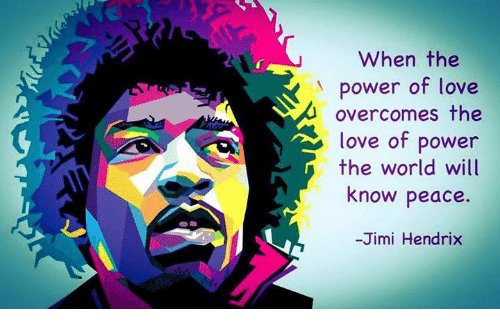 ‘Think and do a whole other way.’
Reading these words gives me pause. What exactly could this look and feel like if we are to think and do a whole other way? And why would we? Firstly, other doesn’t necessarily mean new. Nor does it mean different - you can do the same thing in a different way (producing the same results). ‘Other denotes a person or thing that is different or distinct from one already mentioned or known about.' We are at a major crossroads. Which answers the why. Around the world we are seeing public systems failing - both for Mother Earth and humanity. Erosion of trust. Infrastructure degrade. Promises not kept. Serious environmental decline. Mounting debt. Growing divide. Secrets and lies. The list is long. This is not new of course. Centuries of leaders from many different cultures and beliefs have taken the approach of taking/manipulating/scaring for power and control. And if you think I’m being a bit harsh, consider the ongoing centralisation of our country’s public assets and services. Consider the ongoing dis-empowerment of communities (whether of interest or geographically) to make decisions that affect them directly. If democracy is government by the people and ‘the people’ are the entire body of the citizens … when did it become acceptable that the people lost their voice in our democracy? Now imagine if a whole other way was empowered through asking the conscious question of ‘what would love do?’ Imagine a community, a district, a nation that made decisions from a place of deep affection. In other words, with genuine care and respect for its people and its place. What might it encourage? Celebration for and of one another? Prosperity? A sense of safety and security? Respect for our planet? Personal accountability? Tolerance? As we begin to move into both local and central body pre-election activities, it is a time to seriously consider our collective future. Our focus needs to be on brave policy and smart approaches that empowers and protects. That holds our people and our place at the very heart of all that it undertakes. This is what love would do. 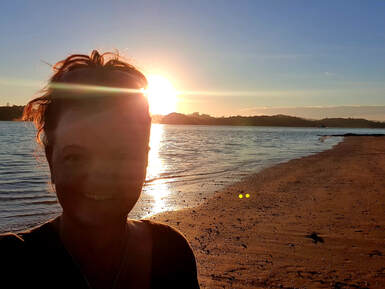 This morning I had the wonder of waking up next to the ocean. Taking my cuppa, I wandered along the beach, the new days sun warming me through.
A deep feeling of gratitude and happiness came over me. It got me pondering. In these crazy times, how many of us are standing in the very moment and recognising all that is amazing. How many of us are remembering to stop and breath, deeply. Grounding into Papatūānuku, allowing her to hold us, even for a brief while. There’s an old saying ‘where your focus goes, energy flows.’ In other words, consider what you are bringing (potentially without realising it) into your life. What are you reading? What are you watching? What are you hearing? What are you feeding? Fear or Hope? Draining or Uplifting? Division or Unity? Apathy or Empathy? Or are you just plain over it all? I ask at this time, because I am seriously concerned about the (mental) health and well-being of Kiwi’s. I’m concerned about mid to long term impacts, particularly for our children. It feels that this feeling of fear, that manifests in many different guises, is really heightened at the moment, with what is happening in our own country and around the world. It’s not that there hasn’t always been challenges, always been something to worry us. There has and potentially always will be – if we choose. I think one of the greatest things we can do as individuals is learn to only focus on what we can control. And yep, this is an oldy too. But worth reiterating. Putting energy (worry) into things you can’t control can create unwanted outcomes, including ill-health. We can’t control what others think, do, feel. We can’t control world events. We can’t control the weather. It’s worth noting that we can choose (consciously or unconsciously) to allow others to control us. And, yes of course, we can manipulate and be manipulated. This tends to only work for so long before consequences reveal themselves. Free will and all that. If we focus on things we can control, mainly our (re) actions, then we can do something about it. Whether this be recognising unhealthy patterns (and addressing this), what makes us happy (doing more of this!) or just holding the awareness within ourselves (without feeding it). I know there is a LOT going on at the moment. I’m not saying put your head in the sand and hope it all goes away. What I am encouraging is to take a moment to just be in the moment. To focus on all that is right in your world. Allow this feeling to fill you. To calm you. To hold you. Also, maybe take a moment to consider what you are allowing into your thoughts, your mind. ‘Being healthy’ isn't just about our physical being, it’s our mental too. If you’re struggling to find sunshine in your day, please, please reach out. There is so many people that care for you. Truth. You do have a choice in all this. In aroha.  It’s being a time of observation of recent past and current events. Experiencing feelings of sadness, frustration, hurt, anger, hope and aroha – not all at the same time thank goodness.
This world of duality, where we generally have a ‘one’s wrong, one’s right’ approach. It seems we humans can’t quite get to grips with the idea that maybe both parties are right some of the time. In the current situation, many have valid arguments, have valid fears and are holding strongly to their own personal truth. The reality is at the mo, it is very difficult to know what the facts are, as we get constantly bombarded from all sides. Most of these experienced experts will be sharing some fact, mixed in with some assumptions, have some omissions and maybe adding a bit of storytelling – we are human after all. We all have biases. We all see what we want to see. Believe what we choose to believe. And let’s not underestimate the amount of fear that is being currently generated. This too is incredibly motivating (and controlling). As with all things, people will find their truth amongst this. And who am I to say they are wrong? Who am I to assume I know what they know, have experienced what they have experienced? The point being, there should be no shame in holding an opinion contrary to others. Isn’t that what freedom (of speech) is all about? I might absolutely disagree and have my own truths to back me up. But what I have learnt (and continue to learn) is sometimes it’s really healthy to agree to disagree. To allow others to walk their truth, learn and grow from their journey and me from my own. To offer advice only when asked. It’s called respect. When the next debate comes along and we find ourselves on opposite sides of yet another dilemma, wouldn’t it be wonderful to know we can recognise that our opposing opinions might be where our strength lies? Because this is how we learn and grow – as individuals and as a nation. Our decisions can be richer and wiser just through the ability to empathise with others. This is not to say one shouldn’t stand strongly in what one believes. We absolutely should! Particularly so if there are injustices, which there are. It is to say we need to be mindful others will have different views and can feel just as strongly about them. And that’s okay. It’s healthy. It’s democracy. It’s also completely normal. The word advocate and enquiry come to mind. One is to have formed an opinion and then encourage others to think the same. The other is to come with an open mind. To maybe hold an idea but be open to hear and consider what others have to say. We are at an incredibly important crossroads and the question needs to be asked. What world do we wish to live in, raise our children in? One of respect? One of building strength and commonality through diversity? Or one of bitter division? I would suggest one that we are empowered to think and create. One where transparency, freedom of choice and equality are all highly valued, as this is our right, our strength and our power. It is time to choose a new path. Arohanui Aotearoa. NYC Midnight #ssc2022
Genre: Political Satire Subject: A collaboration Character: A cheapskate I quietly turn my back on them. It’s going to be another one of those days. Spit Polish is already inflated with too many words. Old Op Shop, in stained, brown cardigan, doing the usual snorts in the usual way, strides around the room, chest puffed out. Boring. Shiny Shoes smells like they’ve spent another night sleeping in the pub down the hill. Fortunately, they seem to recognise their own whiff (far too much cologne). Unfortunately, they choose to sink into my favourite old armchair over in the corner. (Leather does have a way of holding all sorts of memories). A few others, deemed less important by those who feel themselves more important, are seated around the edge. Shoulders slouched on uncomfortable chairs, notebooks in hand. Their air is perceived indifference, waiting for the ‘wise’ words of the important people who make the important decisions. We all know this is horseshit. The ones with the real power never show themselves, of course. In fact, I have never even heard them, let alone seen them. I know they exist though. It seems their tyranny arrives via funny little grey people, who pop in every now and again. Or sometimes, something obscure comes through on the big screen. More often than not their influence is completely hidden behind other actions that motivate the masses to do things. Sometimes against their will it seems. But as we all know, fear has a funny way of getting us to do stuff that we may not otherwise. This I know for sure. The one who always wears the funny hats, Shuffles I like to call them, has draped a knee over the corner of the big central table, casually flicking the end of a ballpoint. Completely distasteful. Even I know that table holds importance. Just the smell of it invokes history – I don’t think they even make things out of that wood anymore. Then there are the two at the other end of the table – Ice Drop and Lavender. They have their own agenda, making eyes at each other as they do, thinking they are just a little bit smarter than the rest. And to be fair, there is some truth in this. Shame they’re so full of themselves. Woah, what’s that? I spin round. Someone new in the room! Oh wow, now that’s class! I haven’t seen anyone from that neck of the woods in here for some time. All smiles and radiant hope. I like her instantly. Trustworthy. I pull myself up, there may be hope in this day after all. The rest of the room pretend not to notice her. Although this is the reason they are here, of course. Actually, let’s be honest. They don’t like to make a fuss when new people arrive. Seem to deem it unnecessary, inappropriate or similar. The reality is, they do like to remind themselves of their own self inflated importance. Hopeful, I call her. She stands centre stage for a moment, casting her eye around the grandness. Seems she’s rather impressed - by the room that is. She even goes over and runs her hand gently over the back of the big chair at the big desk, a touch of, could that be nostalgia, at the corner of her mouth? It's about this time that Spit Polish decides to acknowledge her. Being the most senior person in the room, the succession of words ceases abruptly. Everyone, including Shiny Shoes, comes to attention. This always makes me groan a bit, although, I’m not really in a place to pass judgement. This lot – always eager for favours. It’s like, who sits best in class gets to lead the rest to the lunchroom. Spit Polish goes through the usual blah, blah welcome speech. And that’s what it is, for sure. A fatuous effort to make Hopeful feel like one of the team, albeit it fleetingly. You know, other important stuff to attend too, so make it quick eh? Oh, the shame! I roll my eyes and flop down. Hopeful brings up the big screen. She’s prepared and enthusiastic. I really do like her. Other than Spit Polish and Old Op Shop, who really do need to be seen to be engaged, the others show their usual disinterest, shuffling through their phones or gazing out the window. It’s all a bit of a ruse of course. The reality is these things generally go straight over Shuffles’ head. Although capable, Shiny Shoes doesn’t usually focus long enough to comprehend. Too absorbed in how best to scratch the next targets back. So many colourful pictures with very few words flick across the big screen. Seems there is some sort of Potential Calamity heading our way! It appears it’s really going to affect the masses, and not in a good way, if it all unfolds. Hopeful is talking with great conviction, obviously keenly committed to seeing her proposal materialise. I also sense a little trepidation. I’ve got to give her credit though. I think she’s acutely aware convincing them is going to take some doing. I can see she’s up for it though. Turns out my day is definitely not going to be so dull after all. I get myself more comfortable. I see Ice Drop and Lavender have ceased peeking at each other over the tops of their phones and seem to have taken a genuine interest in Hopeful’s cause. Wonders never cease. They too can sense this has merit. Although, the devil in me would suggest they can smell the opportunity. You know, win them a few more fans. Ironically, the last time they tried that stunt it all backfired. They both ended up with their tails between their legs, on the end of one of Spit Polish’s sermons about the importance of public integrity. And of course, making the party look good. Hopeful carries heartily on. She’s really on a roll. And then, yep, right on cue old Op Shop cuts in. Huffing and puffing, noise is made around the assumed cost and the enormous waste of time such an idea will create. Hopeful must hold some sort of importance, as Spit Polish signals Op Shop to quieten down with the calculated flick of a stern eyebrow. Op Shop is subdued for the moment. Hopeful continues to do her best to capture her audience. She keeps referring to a Collaboration. Bravely, it appears she wants the room to collaborate with the masses. Not a word I’ve heard uttered in here for a while, although I do suppose it is the very reason they all come together. By the looks on a few faces, it suggests it’s a completely foreign concept. I know she knows this is not the norm. I mean, actually listening to the Great Unwashed and then actually working alongside them – like equals!? It just goes against the grain. Don’t get me wrong. They like to throw out the odd bit of encouragement – give the dog a bone right? A couple of tax breaks here, build a bridge there, couple more dollars over there. It’s how it rolls. I can see Old Op Shop scratching an ear, always a sign of agitation. With a few minutes to spare, Hopeful concludes with some excellent reasoning as to why this is imperative. She then looks expectantly, first at Spit Polish and then Op Shop, before scanning the room. Shiny Shoes is leaning forward. Whether in an act to appear interested or just to release a bit of hot air, I’m unsure (hope no pickled onions were consumed last night). Waves a hand with a grunt and sits back to stare out the window. Shuffles, shuffles. Never get much out of that one. Maybe a ‘very good dear.’ Oh, and should the person be attractive (with a particularly low neckline) a barely polite comment along the lines of how well they’ve presented themselves. This is offered in this moment. Spit Polish knows where the buck stops, but Old Op Shop will have a lot to say on this one. The others on the side-line perk up. Here’s one who might just get the nod. Of the duo up next, Lavender speaks first, as is the norm. The ole good cop, bad cop routine. Ho hum. They’re careful not to disclose their version of the truth. Rather, Lavender pokes around the edges. First praising and then focusing in on the merits. Clarifying once again the why and checking the facts versus assumptions. Ice Drop gets the signal and plays the part by picking holes in just about everything before giving a wee nod over to Spit Polish, indicating it’s done. Of course, no acknowledgement to Hopeful directly. Likes to put people ill at ease. Spit Polish takes a good look at Hopeful, sensing that this woman is indeed the real McCoy. Fresh, smart, inspired. Reminds Spit of the days when first becoming important in the public eye. Truthfulness and desire to see a better tomorrow had led to the convincing win. Now, all that is a distant memory as the pressures of keeping the masses (quietly) under control has overtaken the dream to bring about a more hopeful future. And now before them stands that very opportunity. Ready. Willing. Able. Spit Polish surprises me for a very small moment and acknowledges Hopeful with a few words of encouragement. This of course irritates Op Shop no end. Protocol demands who should speak next. Spit Polish allows a wee sigh to slip out. Could it be regret? Looking over at Old Op Shop the hand is waved to open the floor. Op Shop jumps up. The old, scuffed slip-ons hiding a pair of holey socks. Never missing an opportunity to demonstrate miserly ways, the old cheapskate starts with a very poor summary of the concept presented. Even Shiny Shoes raises eyebrows with a look of confusion but says nothing. Old Op Shop argues that a collaboration will soak up far too much time, which we don’t have with this Calamity knocking at the front door. And here was I thinking it was a Potential Calamity. Trying to get the opinions of those who don’t know what they’re talking about is a complete waste of time and taxpayers’ money! Unbelievably, even for Old Op Shop, the suggestion is then made that the notion of collaborating with the masses is tantamount to cooperating with the enemy. In the act of being transparent, important to note that I’m paraphrasing here. The word ‘enemy’ is my word not theirs (although it infers the same). Hopeful, forever hopeful, listens to the groundless arguments with gentle eyes and a saddening heart. She straightens her shoulders when Op Shop finishes and looks directly at Spit Polish, who feigns something in an eye and rubs it. I sense her wisdom. She is wise enough to know not to speak, as ultimately her words will hold no weight should the master not give the nod. We’re all, well almost, looking with some anticipation at Spit Polish. More than one in the room is hopeful, most indifferent and another now asleep. I know Spit is deeply aware of the enormity of the decision. Having watched the mannerisms of this individual for some time now, I can tell by the way they have pinched thumb and middle finger together, they are conflicted. I feel somewhat pleased by this. I also sense Spit Polish might have come to a different decision a few years ago. So bloody tired. Now set in comfortable ways, empowered by those that will be silenced yet again, Spit Polish resigns with an inaudible sigh and gives a quick and efficient ‘sorry, not today.’ Unsurprisingly, a bone is offered, it’s part of the ploy. The request is made to modify the proposal and present it to a focus group. Said group to comprise mainly of present members, of course. I see Old Op Shop’s dowdy face twist into a smile of smug satisfaction. The rest already starting to ready themselves for the next recipient of bad news. Hopeful, on the cusp of expressing her obvious exasperation, takes a deep breath and has the fortitude to gracefully nod. She pushes her card (again) over to one of the others. I am, however, incensed and get up to tell them so. With my legs spread firmly on the worn wooden floor, I bark out my displeasure. How can they not see that her argument is sound? This is a bloody good, appropriate approach! And guess what? Not only might you stop the Calamity but win some brownie points in the process. Elections coming up soon? I mean really, think about it! They all stop in their tracks, as they do when I robustly voice my opinion. The usual quizzical enquiry hangs on their foreheads before they turn back to their deeds of the day. Hopeful looks at me with a mix of gratitude and compassion in her eyes. She gets it. She knows I know. Even if I am just the dog. |
AuthorTania McInnes. Archives
January 2024
Categories |
 RSS Feed
|
|

|

|